The Daily Driver
  • News
    • NVIDIA
    • AMD
    • Intel
  • PC Components
    • RAMs
Sign In

Major insurers move to avoid liability for AI lawsuits as multi-billion dollar risks emerge — Recent public incidents have lead to costly repercussions

Димитър Панев Tech Industry News 26 November 2025

GettyImages-86430864

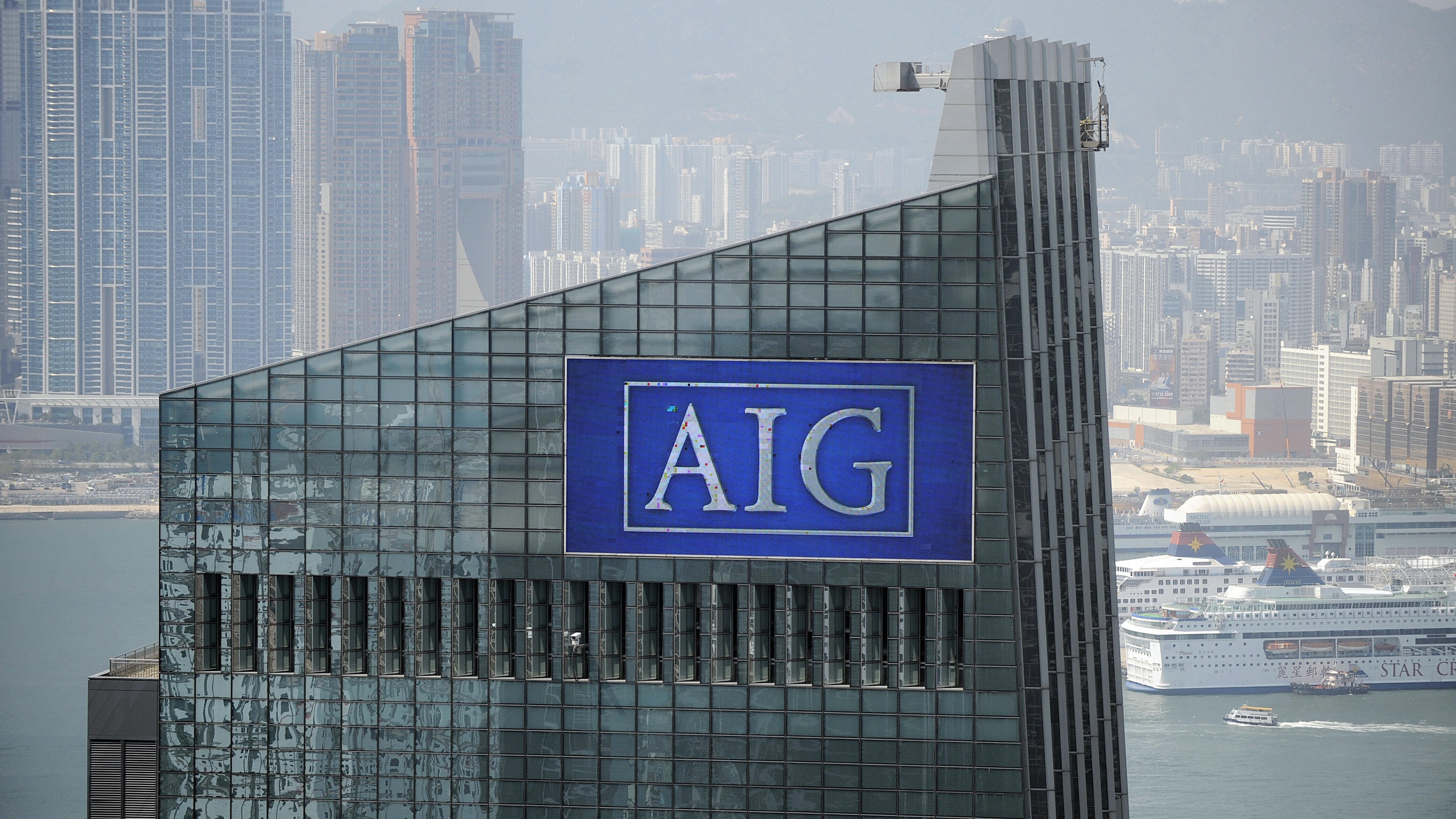
Major insurers are moving to ring-fence their exposure to artificial intelligence failures, after a run of costly and highly public incidents pushed concerns about systemic, correlated losses to the top of the industry’s risk models. According to the Financial Times, AIG, WR Berkley, and Great American have each sought regulatory clearance for new policy exclusions that would allow them to deny claims tied to the use or integration of AI systems, including chatbots and agents.

The requests arrive at a time when companies across virtually all sectors have accelerated adoption of generative tools. That shift has already produced expensive errors. Google is facing a $110 million defamation suit after its AI Overview feature incorrectly claimed a solar company was being sued by a state attorney-general. Meanwhile, Air Canada was ordered to honor a discount invented by its customer-service chatbot, and UK engineering firm Arup lost £20 million after staff were duped by a digitally cloned executive during a video-call scam.

Those incidents have made it harder for insurers to quantify where liability begins and ends. Mosaic Insurance told the FT that outputs from large language models remain too unpredictable for traditional underwriting, describing them as “a black box.” Even Mosaic, which markets specialist cover for AI-enhanced software, has declined to underwrite risks from LLMs like ChatGPT.

As a workaround, a potential WR Berkley exclusion would bar claims tied to “any actual or alleged use” of AI, even if the technology forms only a minor part of a product or workflow. AIG told regulators it had “no plans to implement” its proposed exclusions immediately, but wants the option available as the frequency and scale of claims increase.

At issue is not only the severity of individual losses but the threat of widespread, simultaneous damage triggered by a single underlying model or vendor. Kevin Kalinich, Aon’s head of cyber, told the paper that the industry could absorb a $400 million or $500 million hit from a misfiring agent used by one company. What it cannot absorb, he says, is an upstream failure that produces a thousand losses at once, which he described as a “systemic, correlated, aggregated risk.”

Some carriers have moved toward partial clarity through policy endorsements. QBE introduced one extending limited coverage for fines under the EU AI Act, capped at 2.5% of the insured limit. Chubb has agreed to cover certain AI-related incidents while excluding any event capable of affecting “widespread” incidents simultaneously. Brokers say these endorsements must be read closely, as some reduce protection while appearing to offer new guarantees.
As regulators and insurers reshape their positions, businesses may find that the risk of deploying AI now sits more heavily on their own balance sheets than they expected.

TSMC sues former executive over defection to Intel, says it's highly likely he stole trade secrets — chipmaker claims Wei-Jen Lo broke non-disclosure and non-compete agreements

Димитър Панев Tech Industry News 26 November 2025

TSMC

TSMC on Tuesday announced that it had filed a lawsuit against Wei-Jen Lo, the company’s former Senior Vice President, who used to be responsible for the company’s strategy from 2024 all the way to his departure from the company in July 2025.

After leaving TSMC, he joined Intel as Executive Vice President, and his former employer has reasons to believe that he illegally shares TSMC’s trade secrets with the rival. In addition, the foundry has accused Lo of contract breach as he signed both a non-disclosure and a non-compete agreement with TSMC.

Wei-Jen Lo joined TSMC from Intel in 2004 as a Vice President and became Senior Vice President responsible for the company’s advanced process technologies roadmap in 2014. In March 2024, he was reassigned to Corporate Strategy Development, a group that advises the Chairman and the CEO, but is not directly involved in the research and development of next-generation process technologies. But while the new assignment formally removed him from control over TSMC’s R&D organization and process development, he continued calling together engineers from R&D teams who were not under his command to gather updates on technologies they were working on and process technologies that were at the stage of pathfinding and would be developed sometime in the future, according to TSMC.

"There is a high probability that Lo uses, leaks, discloses, delivers, or transfers TSMC’s trade secrets and confidential information to Intel, thus making legal actions (including claiming damages for breach of contract) necessary," the company told Tom's Hardware.

TSMC says that shortly after leaving the company in July 2025, Lo became an Executive Vice President at Intel, a plan he failed to reveal to TSMC’s General Counsel during the exit interview. Based on Lo’s access to unreleased technical information, his continued contact with R&D staff from 2024 to 2025, and his immediate arrival at a major competitor, TSMC alleges that there is a strong likelihood that he may use or disclose the company’s trade secrets to Intel. "

“During his employment, Lo had signed a Non-disclosure Agreement and Non-compete Agreement,” a statement by TSMC reads. “When the General Counsel of TSMC, Sylvia Fang, conducted exit interview with Lo on July 22nd, 2025, she provided a reminder notice for Lo to read thoroughly. During the exit interview, the General Counsel also explained the non-compete obligation after separation and inquired about his plans after retirement, Lo replied that he would join an academic institution, and did not mention his plan to join Intel.”

Given these circumstances, TSMC states that it has asked the Taiwanese Intellectual Property and Commercial Court to intervene and stop the potential wrongdoing. However, it is unclear how exactly TSMC plans to enforce the court’s decision in the U.S. and make Lo depart from Intel. Intel was not immediately available for comment.

Subcategories

NVIDIA

AMD

  • News
    • NVIDIA
    • AMD
    • Intel
  • PC Components
    • RAMs